Key Notes
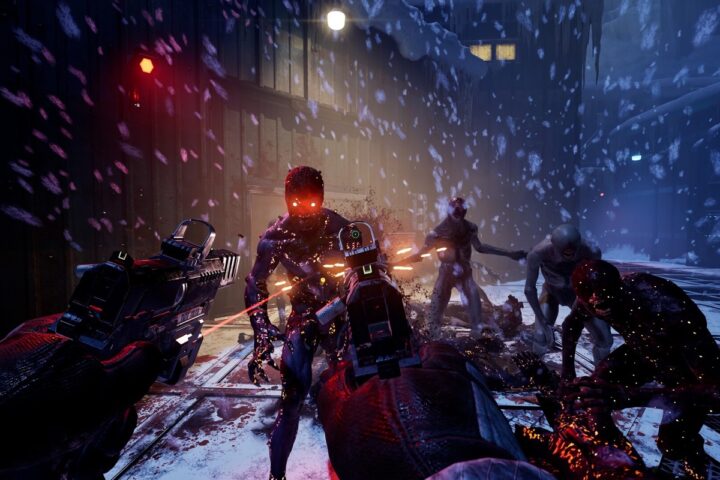
- Felix Rieseberg says his small-scope shooter took eight hours and roughly $550 at API prices, with a single initial prompt followed by automated development.
- Mirror Earth’s creator claims real-time weather and destruction but also identified a collision bug, illustrating the work still needed on generated prototypes.
- Turbo Tails offers six racers, three tracks and a public multiplayer lobby, while its creator says the project took three prompts.
A first-person shooter built over eight hours, a destructible version of Earth and a kart racer with a multiplayer lobby are among the game demos emerging from Claude Fable 5.2. The most striking figure comes from Anthropic engineer Felix Rieseberg, who estimates that his shooter used roughly $550 worth of API processing.
The projects offer something more useful than a trailer: browser links that let people inspect the results. They also show how much work can sit behind the phrase “one prompt,” with hours of automated development between the initial instruction and a playable build.
Anthropic released Fable 5.2 on November 9, highlighting improvements in coding, reasoning and visual work. Its early game experiments span three quite different problems: assembling a shooter, creating an explorable world and putting a racing game in a browser.
Saltline’s Eight-Hour Shooter Experiment
Rieseberg described his test as a one-shot request without human feedback. He said the models, textures and sounds were produced from scratch, with the run consuming about 2.7 million output tokens and 445 million input tokens, much of the latter cached.
The result is Saltline, published as a Claude artifact. The $550 figure is his estimate at API prices; it is not a disclosed commercial development budget or a promise that another user can reproduce the game for the same amount.
His follow-up also supplies an important detail about the brief. He asked for a visually ambitious FPS with a deliberately tiny scope, including a small level. AAA-like presentation was the target in the prompt, rather than an independently established measure of the finished result.
That makes the experiment interesting on its own terms. A tightly bounded shooter is a substantial coding and presentation task. Its existence does not establish that the same process can deliver a full campaign, console certification or the performance work expected of a major retail release.
A Destructible Earth and a Multiplayer Kart Racer
Matt Shumer took a different approach with Mirror Earth, hosted on Spawn. He described it as an Earth-based game with destruction and weather matching real-world conditions in real time. Those are the creator’s claims; the post does not provide an independent validation of its geographic coverage or weather accuracy.
Shumer soon flagged a more immediate limitation: the car could drive through objects. Collision handling is a basic part of making a world convincing, and his example shows how a broad, impressive concept can coexist with unfinished interactions.
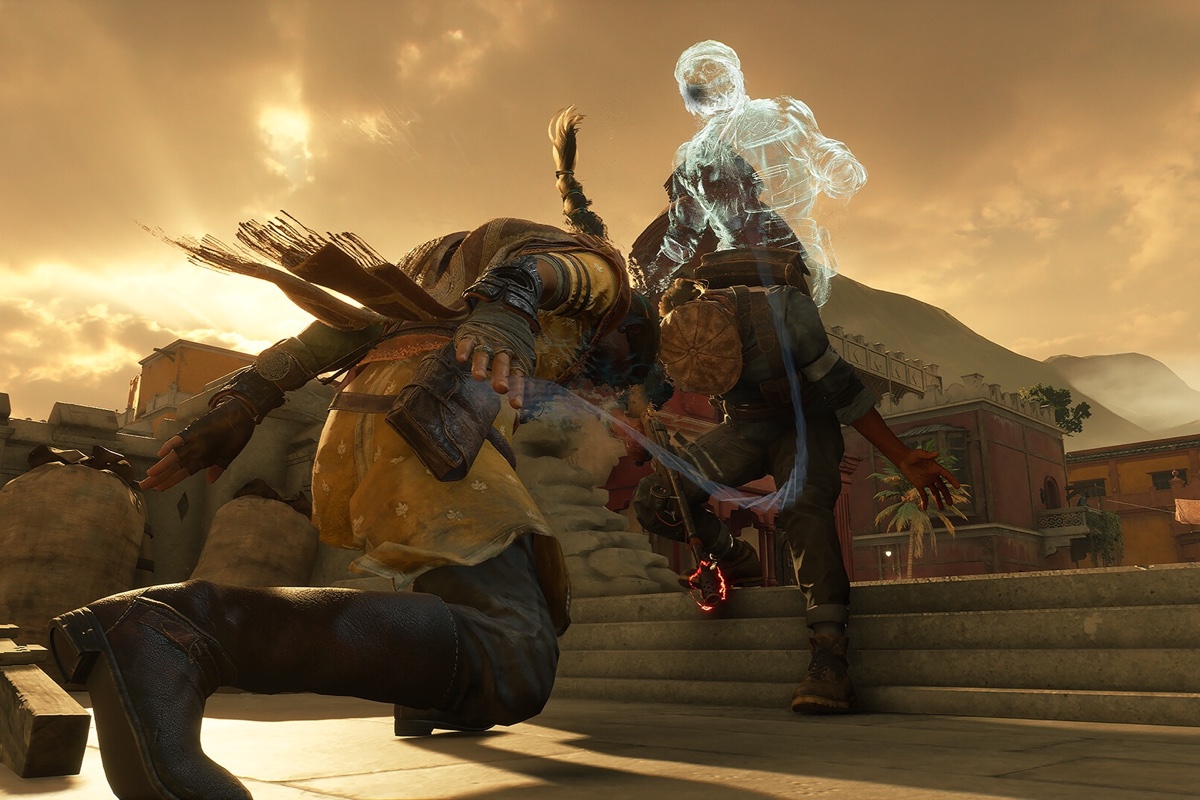
Peter Yang’s Turbo Tails is more contained. The browser racer presents six selectable characters and three tracks: Coral Cove Beach, Thunder Temple Jungle and Magma Peak Volcano. Its menu includes Grand Prix and multiplayer options.
We checked the public menu and opened its multiplayer lobby, which offers an invite link for friends. That confirms the interface is available, although we did not test a race between multiple human players. Yang advertised drifting, ramps and items, then said the project had taken three prompts and that he planned further improvements.
The Work Between a Prompt and a Finished Game
The clearest opportunity here is faster experimentation. A small team could use a playable build to decide whether a racing mechanic, combat setup or world interaction deserves more development. Players can also judge a linked prototype more directly than a carefully selected promotional clip.
But prompt count measures only the instructions a person supplied. Rieseberg’s eight-hour run and large token totals show that a short brief can trigger a lengthy process. The cost and reliability of repeating that process remain important for anyone planning to use it on a real project.
Testing is part of that calculation. We recently covered Aura Autopilot, an open-source agent designed to playtest projects inside game engines. Creation and testing are separate jobs, and Mirror Earth’s collision problem is a concrete example of the checks a generated build still needs.
All three projects are linked above for readers who want to explore them. Saltline provides the clearest account of time and processing costs, Mirror Earth exposes the challenge of world simulation, and Turbo Tails offers a familiar racing structure with a publicly accessible multiplayer lobby.