
Key Notes
- Autopilot is open source and supports in-editor playtesting in Unreal Engine, Unity and Godot on Windows and macOS.
- Ramen reports seven successful tasks and 1.7x faster completion than Claude Code in a developer-run test using one game.
- Project memory lets later attempts reuse earlier findings, while model usage still requires an account or API credentials.
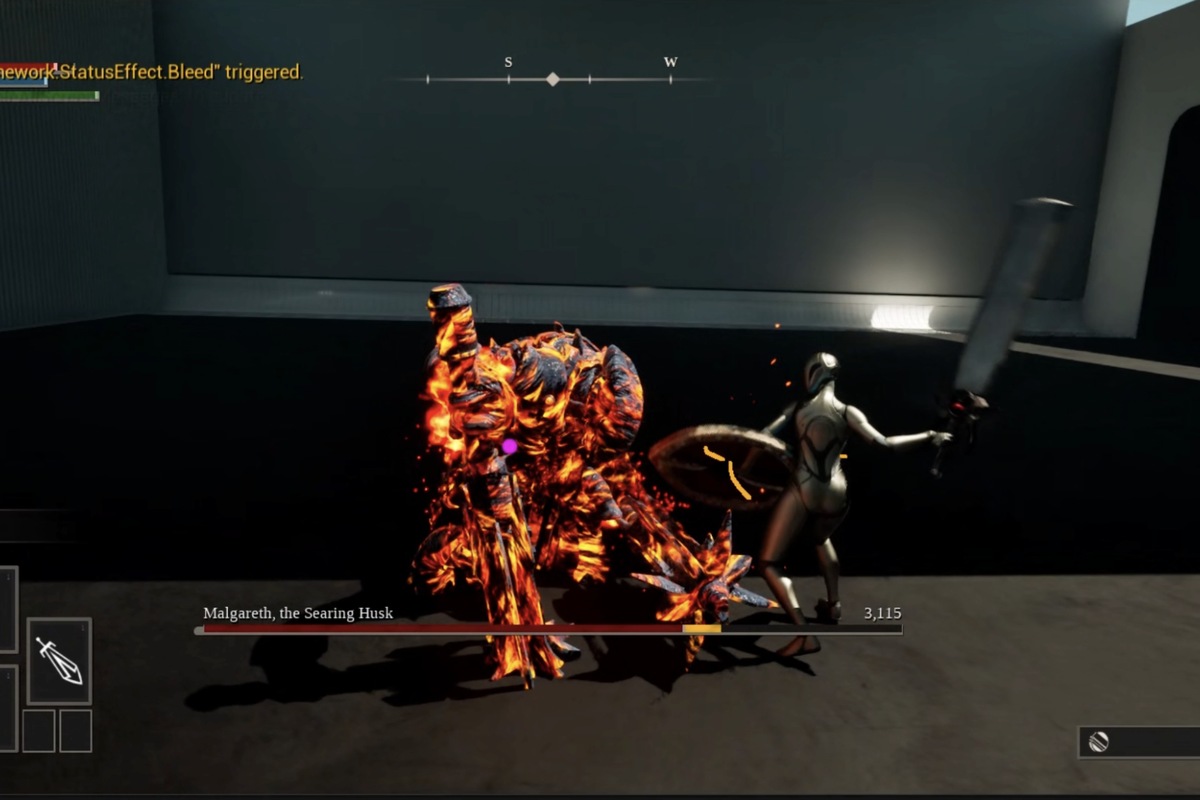
Ramen has released Aura Autopilot, an open-source AI playtesting agent for Unreal Engine, Unity and Godot. The tool can explore levels, check whether features work and attempt objectives such as defeating a boss, then produce a report for the developer.
The company announced the release on October 30. Its code is available on GitHub under the Apache 2.0 licence, with support for Unreal Engine 5, Unity 6 and Godot 4 on Windows and macOS.
Testing a Game From Inside the Editor
Autopilot works with a developer’s project rather than simply launching an arbitrary retail game. After installing the relevant engine plugin, a developer describes what to test. Prompts can ask it to investigate a crafting system, search a level for problems or verify a specific interaction.
For each request, the agent opens a play-in-editor session, examines the project’s source code and starts playing. Its coding agent builds game-specific control routines, while a separate decision model chooses actions during gameplay.
The system retains project memory between attempts, including notes, reusable control code and previous reports. Ramen says that lets later runs build on earlier discoveries instead of researching the same mechanics again. This is stored knowledge about the project, rather than a claim that every session retrains the underlying model.
What the Claude Code Comparison Actually Shows
Ramen’s technical report compares seven tasks in Easy Survival RPG V5 running in Unreal Engine 5.8. Autopilot passed all seven, compared with five for Claude Code and four for an unnamed competing game agent.
Mean task duration was 262 seconds for Autopilot, 437 seconds for Claude Code and 508 seconds for the competitor. That is the basis for the advertised 1.7x speed comparison with Claude Code. It measures completion time in this test, rather than twice the bug-detection ability across games.
Runs started with empty memory. Timing included research but excluded setup such as opening the play session. Tasks ranged from checking hunger depletion to crafting a weapon and killing a zombie; shortcuts such as teleporting or creating inventory items counted as failures.
These are the developer’s results from one game and a small task set. They do not establish performance across every supported engine or show how reliably the agent catches unfamiliar bugs in a production project.
Open Source Still Has Model Costs
The setup documentation offers an Aura account or developers’ own model credentials. Autopilot can also connect to Claude Code and Codex through MCP, so those coding tools can be part of the workflow rather than only competitors.
Model access still needs to be arranged: open-source code does not mean unlimited inference is free. The documentation distinguishes decision-model usage from coding-agent usage, which can fall under a developer’s existing Claude or ChatGPT subscription.
We recently covered Valve’s position that studios should choose their own development tools. Autopilot applies that choice to checking games. Repeated functional checks could help a small team, but judging whether combat feels satisfying, an instruction is understandable or a level is enjoyable still requires human assessment.