Key Notes
- Flint Capital led a new $10 million round for Mika Games, which will support mobile studios’ development and larger paid marketing tests.
- Mika combines early studio equity with separate user-acquisition capital to help teams establish retention, monetization and payback before seeking further financing.
- The portfolio has expanded from three to five studios this year, including the developers of Legendale, Punko, Wargard, Merge Dale and Sea Bloom.
Mika Games has raised another $10 million to help mobile game studios move from soft launch into larger-scale growth. Flint Capital led the funding round, with participation from new and existing investors.
Founded by Wargaming co-founder Nick Katselapov, the investment company backs free-to-play developers with capital and operating expertise. The new money is intended to support both game development and paid marketing tests, addressing a stage when a promising title may not yet have the evidence needed to attract specialist financing.
The Cost of Proving a Mobile Game
A soft launch gives a studio an opportunity to test its game with a limited audience before a wider rollout. Getting useful evidence, however, can require substantially more than releasing a build: developers need to learn whether acquired players stay, spend and generate enough revenue to justify the cost of reaching them.
Mika says specialist user-acquisition financiers typically want several months of successful campaigns, between $300,000 and $500,000 in prior marketing spending, and a predictable payback period. Those are the company’s description of the financing gap, rather than a universal entry requirement for every funding provider.
The difficulty is circular. A studio needs campaign results to qualify for a bigger marketing budget, while generating those results already requires money. Small tests can establish an initial signal without showing that the same economics will hold when advertising reaches a broader audience.
Equity and Marketing Capital Serve Different Jobs
Mika’s model combines an equity investment in the studio with a separate pool of capital for larger paid-acquisition tests. The former supports the team and product; the latter helps establish how the game performs when the studio spends more to bring in players.
Those campaigns are intended to measure retention, monetization and marketing payback. If the results support further investment, a studio can use the evidence to pursue additional financing and expand its acquisition budget. The funding does not itself establish that a particular game can grow profitably.
Flint Capital general partner Sergey Gribov described an approach based on spreading investment across studios and genres, allocating money in stages and using product and player-group data to guide further commitments. The announcement does not disclose a standard ownership percentage or the detailed terms offered to portfolio teams.
Mika’s company site also sets out hands-on support in business processes, game design, monetization, marketing and product strategy. Its role therefore extends beyond supplying an advertising budget.
Five Studios Across Several Genres
The portfolio has grown from three to five studios this year. Mika’s current roster comprises Guli Games, Hot Siberians, Agonalea Games, Bulberry Studio and LevelApp, covering different styles of free-to-play mobile games.
The funding announcement cites more than 3 million players for Guli Games’ farming adventure Legendale and over 500,000 downloads for Agonalea’s roguelike tower-defense game Punko. Those are company-supplied milestones using different measures, rather than directly comparable figures for active audiences or revenue.
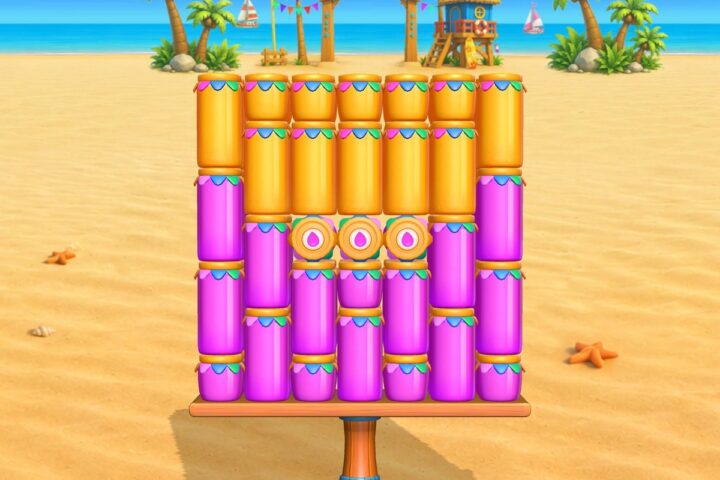
The newer investments include Bulberry, whose Wargard combines deck building with direct troop control in competitive strategy battles, and LevelApp, which develops merge games including Merge Dale and Sea Bloom.
The latest raise follows Mika’s public launch in 2024 with an initial $10 million led by Flint Capital and an announced $50 million investment ambition. That ambition should not be read as capital already raised or deployed. In April 2025, Mika also announced a $2 million investment in Argentina’s Agonalea Games.
The deal adds another route to financing in a busy mobile market. We recently reported that Turkish mobile studios attracted $396 million in private investment from January 2025 to mid-October 2026. Mika’s new $10 million sits one step earlier in that chain: capital raised by an investment company to support multiple studios, rather than a single developer’s game budget.