Key Notes
- GTA VI’s early work dates to 2015, but Red Dead Redemption II drew resources away from the project before its scope narrowed from the Americas to Vice City and the surrounding region.
- Rockstar’s company-wide workforce grew from roughly 2,400 to 4,700, while Rob Nelson, Phil Hooker and Aaron Garbut shared development leadership after senior departures.
- Bloomberg describes unresolved gameplay decisions, pandemic disruption and disagreements over readiness before the public release moved from 2025 to May and then November 2026.
- Rockstar rejected the reported budget rumor of more than roughly $1.5 billion without disclosing an exact total, and the confirmed launch remains November 19 on PlayStation 5 and Xbox Series X|S.
Rockstar Games nearly doubled its workforce while building Grand Theft Auto VI, as an ambitious plan spanning the Americas became a more focused return to Vice City. A new Bloomberg investigation offers a detailed account of the decisions, disruptions and leadership changes behind a game now scheduled for November 19.
Jason Schreier’s report, based on interviews with Rockstar executives and employees, traces the project’s early work to 2015. It also challenges a widely circulated budget claim: Rockstar rejected the suggestion that development cost more than roughly $1.5 billion, without disclosing an exact figure.
The story helps explain why the wait has stretched across so many years. Rockstar had to finish Red Dead Redemption II, settle fundamental design questions, adapt to a pandemic and decide when GTA VI could meet its release standard. The account also reveals disagreements within a company that has grown substantially since its last major new game.
From Project Americas to Vice City
GTA VI began under the codename Project Americas, with an initial concept encompassing locations in both North and South America, according to Bloomberg. That scope was eventually reduced to Miami-inspired Vice City and its surroundings. The early planning period should be distinguished from the later years when the game absorbed more of Rockstar’s resources.
The company initially hoped to develop GTA VI alongside Red Dead Redemption II. As the western’s ambitions expanded, however, it demanded more staff and management attention. That pushed the next GTA back by years before players had even been given a public release window.
Research trips to Miami helped the team study the places and atmosphere it wanted to recreate. Narrowing the geography therefore did not mean abandoning detailed observation. It gave Rockstar a more concentrated setting in which to build the fictional state of Leonida.
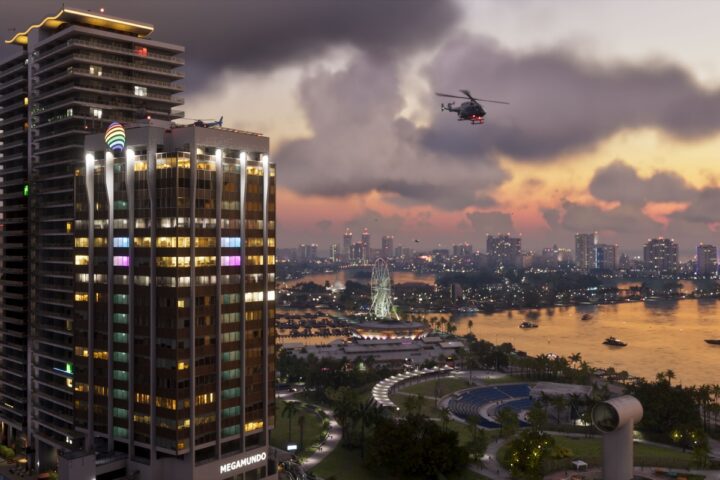
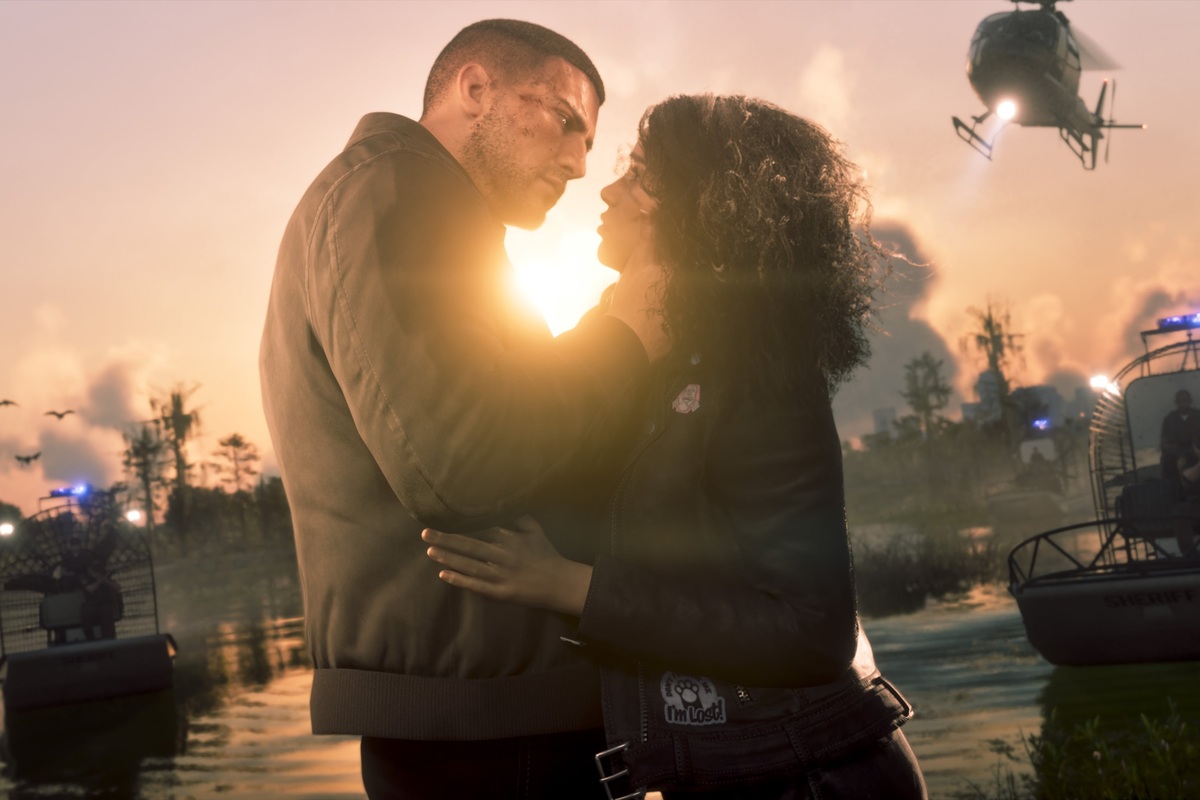
Rockstar’s official overview describes Jason and Lucia becoming caught in a criminal conspiracy across that state after an attempted score goes wrong. The announced game retains a broad setting around its central city, even though its earlier concept was geographically more expansive.
We covered Rockstar’s approach to political satire and avoiding direct references that could date quickly. That is another challenge of a long production: the world being observed keeps changing while writers and designers are still turning it into a game.
A Bigger Rockstar and Three Development Leaders
Bloomberg puts Rockstar’s workforce at roughly 4,700, up from about 2,400 when Red Dead Redemption II arrived in 2018. These are company-wide employee figures; they should not be treated as a confirmed count of people working exclusively on GTA VI throughout its development.
The expansion nevertheless shows the scale of the organization behind the release. A larger workforce can handle more animation, environments, programming and production work, but those disciplines still have to fit together. Headcount alone does not resolve questions about creative direction or which systems are ready to ship.
Rockstar also lost several important figures after Red Dead Redemption II, including co-founder Dan Houser. Development leadership for GTA VI was shared by Rob Nelson, Phil Hooker and Aaron Garbut, rather than placed under a single successor.
The managers told Bloomberg the arrangement did not radically change their everyday responsibilities. Some employees described a less positive experience, saying decisions could take longer. Those perspectives can coexist: familiar duties for senior leaders do not necessarily mean everyone below them experiences the same clarity or speed of approval.
Deciding How Much Realism Players Actually Want
By late 2019, the main story had been established, according to the report, but many other parts of GTA VI remained unsettled. An open world, gunfights, car theft and satire were central to the project. The difficult decisions concerned how those familiar elements should work together and how far simulation should go.
One example involved shopping. Developers debated whether characters should physically pick up products, approach a checkout and pay, or whether that sequence would become tedious. This was a design discussion, not confirmation that the finished game requires players to carry out every step.
The distinction matters because a plausible world and a satisfying game are not always served by the same interaction. An elaborate routine can make an early visit memorable, yet slow down a repeated task. Choosing where to simplify affects the pace of exploration as well as individual animations or menus.
COVID-19 then added a major disruption while those decisions were still being worked through. Later leaks and disputes involving union organizing added further pressure. The report presents these as parts of a complicated production history, rather than identifying a single explanation for the entire wait.
How the Release Moved From 2025 to November 2026
A clearer picture of the finished game emerged by 2022, Bloomberg reports. Rockstar released its first trailer the following year with a 2025 release window. Management believed that target could be achieved, while some employees were more doubtful about the remaining work.
As the deadline approached, leadership agreed the game needed longer. The public schedule moved first to May 26, 2026, and then to November 19. Rockstar’s second delay announcement said the extra months would allow it to finish the game with the expected level of polish.
Schreier reports that Take-Two chief executive Strauss Zelnick accepted the first postponement relatively calmly. His initial reaction to the second was disbelief, before he accepted the developers’ reasoning. The sequence illustrates how difficult it can be for a publisher to plan around a project whose final production needs are still changing.
The current launch commitment remains November 19 for PlayStation 5 and Xbox Series X|S. Take-Two’s release details list the standard edition at $79.99 and describe the launch product as a single-player experience. Those announced terms are separate from estimates about future sales or additional versions.
The Budget Remains Unconfirmed
The most important limit on the budget discussion is that Rockstar has not published a precise development cost. Rejecting a figure above roughly $1.5 billion does not establish how close the real total is to that amount, or supply a detailed breakdown of expenditure.
Nor can a reliable budget be calculated simply by multiplying today’s workforce by the project’s age. Staffing changed over time, and company-wide employees are not interchangeable with a dedicated project team. Development, marketing and continuing support also need clearly defined boundaries before totals can be compared meaningfully.
Rockstar’s leaders expect the technology and experience accumulated on GTA VI to help subsequent projects move faster, according to Bloomberg. Reusing tools can reduce the need to rebuild foundations, but this is an ambition rather than an announced release schedule for another game.
For players, the immediate timetable is still the console launch. We reported on GamesBeat’s claim that a PC version could follow in early 2027; Rockstar has not confirmed that date. The development investigation explains more of the road to GTA VI without resolving every question about what comes afterward.