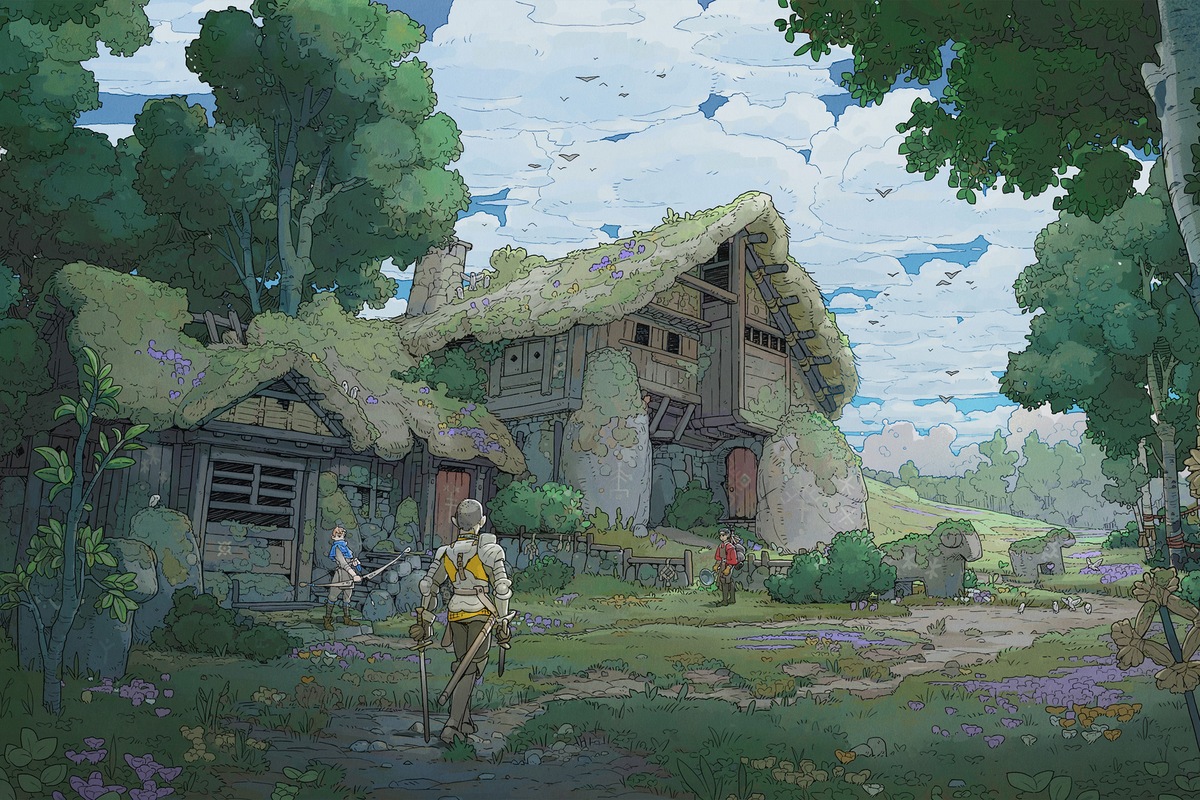
Google introduces Playground for creating and sharing browser games through text prompts. Video: Google
Key Notes
Playground launches for adults in the United States with prompt-based creation and Google One membership tiers, while its experimental rollout limits who can start building.
Games can stay private, be shared by link or enter a community gallery, with leaderboards and multiplayer supported in selected genres.
Unity Spark is still in testing and promises a more advanced creation route through a future Playground integration, with closed beta access coming soon.
Google has launched Playground, an experimental browser platform for creating and sharing games through text prompts, while Unity is preparing a connected tool called Unity Spark. Playground opens in the United States for users aged 18 and over, with creation access rolling out in tiers based on Google One membership.
The October 7 announcement presents a route from describing a game to testing and publishing it without prior coding experience. Unity Spark is the next planned step for more advanced projects, but it remains in testing, with a closed beta coming soon rather than a general launch alongside Playground.
From a Text Prompt to a Playable Game
Playground’s starting point is a conversation about what to build. Creators can begin with a blank canvas, adapt starter prompts or follow guided support. Google says they can then test the result immediately and request changes to physics, rules, characters and environments through the same interface.
That makes iteration central to the pitch. A creator is not simply asking for a finished game in one instruction: the proposed workflow lets them revise its behavior after seeing what the system produces. For newcomers, the practical attraction is being able to explore a playable idea before learning a complex development environment.
Google’s official demonstrations show both the creation process and games running through Playground. They establish the intended workflow, rather than proving how reliably it handles every genre or ambitious design. We have not independently tested the platform, so the no-coding claim remains Google’s description of the service.
Sharing Games Is Part of the Platform
Completed projects can stay private, be shared through a direct link or be published to the Playground Explore gallery. Because the games run in a browser, Google says people can play on a phone or laptop. That removes the need to distribute a separate downloadable build simply to let friends try a project.
Multiplayer and in-game leaderboards are supported in selected genres. With a Play Games profile, users can choose a handle, like games, follow creators and compete for leaderboard positions. Those features give the platform a community layer beyond its creation interface, although multiplayer support should not be assumed for every game.
Google says the gallery uses player ratings and play activity to surface games. Published projects also undergo safety screenings against its community guidelines, alongside user reporting. Discovery and moderation will therefore matter to creators as well as the tools themselves: generating a game and getting people to play it are different challenges.
Unity Spark Is the Next Planned Step
Google describes the forthcoming Unity Spark integration as a way to move toward more advanced mechanics, higher-fidelity 3D and the flexibility of the Unity runtime. Games made through that route are intended to become available to Playground players. The integration is planned, rather than a feature creators can assume is already open to everyone.
Unity’s Spark page describes an AI game maker with a web editor, a waitlist and a closed beta coming soon. Its emphasis on artist-created assets and an editable project suggests a workflow in which prompting is followed by more direct refinement. The page showcases projects including the sci-fi shooter Space Corridor, alongside Horror Story, Emberwell and Robot Race.
The pairing connects an approachable starting point with Unity’s development technology. It does not establish that a Playground prototype will automatically become a finished commercial release, or that Spark’s eventual access terms will match Playground’s. Google’s launch announcement gives membership-based creation access but does not provide a complete pricing or usage-limit table.
We recently covered Ubisoft’s reported Motherbrain initiative, which concerns shared gameplay technology inside established studios. Playground addresses a different part of game creation: helping individuals build and distribute browser-playable projects. For now, the concrete launch is the U.S. adult experiment; broader availability and Unity Spark access remain things to watch as the services develop.