
Key Notes
- Abragames president Rodrigo Terra wants Brazil to become a top-five game producer within a decade, presenting the goal as an ambition rather than a guaranteed ranking.
- Brazilian studio catalogue figures and Latin American consumer revenue describe different parts of the market and cannot on their own demonstrate global production leadership.
- Original games such as Hell Clock, international business support and a developing policy framework give local studios several routes to build wider recognition.
Brazil’s games industry body Abragames wants the country to become one of the world’s five leading game producers in less than ten years. President Rodrigo Terra set out that ambition in an interview with GamesIndustry.biz, linking international growth to wider recognition of Brazilian storytelling and creative talent.
Terra presented the target as a personal wish, rather than a guaranteed outcome. It is a direction for the industry, not a government deadline or evidence that Brazil has already reached a top-five position. The interview does not establish a single numerical measure for that ranking.
Production Capacity Is Different From Player Spending
Brazil already has a substantial development community. Indústria de Jogos’ catalogue listed 1,569 verified Brazilian studios and 4,379 games in its October 5 snapshot. It recorded studios in 169 cities, illustrating a production scene that extends beyond one development hub.
Those figures count catalogue entries. They are not a census of every active company, a revenue estimate or a measure of how many full-time developers Brazil employs. IDJ also warns that catalogue growth mixes newly created games and studios with older ones only recently added, so an increase cannot automatically be read as industry growth.
International business is already part of that scene. The 2023 survey published by Abragames and ApexBrasil found that 58% of responding developers sold internationally. Among domestic developers operating in international markets, half generated more than 70% of their revenue abroad. These are historical survey findings, rather than fresh 2026 measurements.
The consumer backdrop is growing too. Newzoo’s 2026 forecast puts Latin American games revenue at $9.3 billion, up 7.9% year over year. North America remains much larger at $56.9 billion, even with a lower projected growth rate of 5.4%.
Regional spending and Brazilian production should be kept separate. Latin America includes markets beyond Brazil, and its players buy games made around the world. A larger audience creates opportunities, but does not by itself establish that Brazilian studios are capturing that spending or moving up a global production ranking.
Hell Clock Gives the Cultural Ambition a Concrete Example
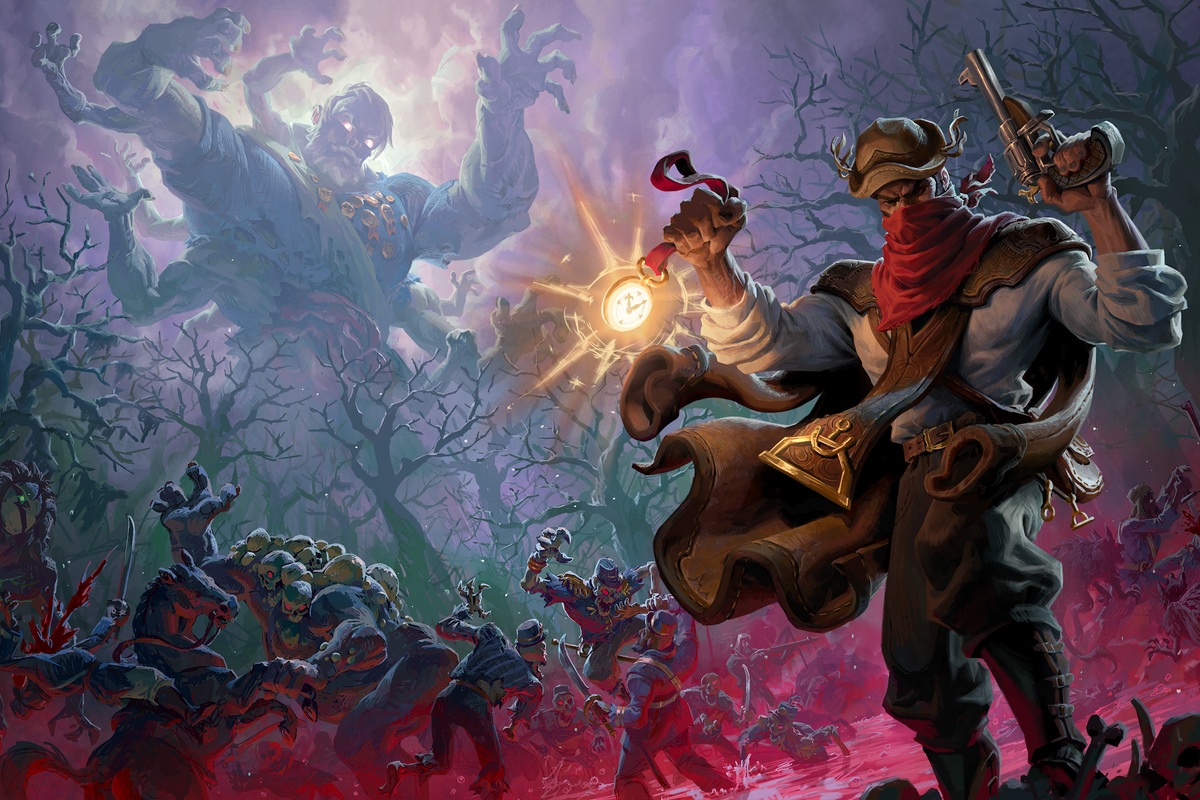
For players, international influence becomes easier to understand through individual games. Rogue Snail’s Hell Clock is a dark fantasy action RPG inspired by Brazil’s War of Canudos. Its protagonist, Pajeú, is a former slave fighting through a cursed purgatory.
The developer describes a combination of fast combat, horror and Brazilian history. That gives the game a recognisable action-RPG structure while placing a specific historical conflict at the centre of its world. It is an example of how a studio can reach genre fans without discarding its local perspective.
Terra’s cultural ambition is broader than increasing the number of releases: he wants international audiences to recognise Brazilian artists, stories and values. Hell Clock makes that idea tangible, but one game cannot establish how widely an entire country’s creative output is known.
Export Support and Policy Provide Routes to Grow
Brazil Games describes its export program as a partnership between Abragames and ApexBrasil, the country’s trade and investment promotion agency. Its stated purpose is to promote Brazilian games internationally and develop new business opportunities for local companies.
The policy framework has also changed. Brazil’s intellectual-property agency INPI explains that Law 14,852 of May 2024 established a specific legal framework for developing, producing, commercialising and using games. It also introduced provision for registering electronic games within the industrial-property system.
Implementation is still part of the work. INPI says a working group was created in March 2026 to study regulation of that registration process, including the technical and creative characteristics of games. Recognising the sector in law and completing the procedures that support it are separate steps.
Other regions are pursuing their own ways to expand local production. We reported on South Australia doubling its Digital Games Fund to A$1 million, with grants for different development stages. Brazil’s export effort serves a different purpose, but both approaches address how local studios can build businesses beyond a single project.
A useful test of the top-five ambition will be whether more Brazilian teams sustain international sales, keep developing original games and build repeat audiences. Those outcomes are more informative than treating a growing consumer market or a longer studio directory as proof that the target has already been reached.