Key Notes
- Nintendo’s Latin America chief says there are no plans to abandon physical releases, with consumer preferences and fan demand guiding the company’s approach.
- Switch 2 game-key cards remain physical products but require a full download, storage space and the card to be inserted when playing.
- Digital sales represented 61.5% of Nintendo’s software revenue in April–June 2026, a measure that includes subscriptions and add-on content rather than only game downloads.
Nintendo has no plans to abandon physical game releases, according to Bill van Zyll, its vice president and general manager for Latin America. His comments offer reassurance to Switch owners who prefer boxed games, while leaving an important distinction unresolved: a physical release does not always contain the game’s data on its cartridge.
Speaking to Coelho no Japão in an interview published on October 11, van Zyll said Nintendo takes consumers’ preferences heavily into account. Switch 2 supports both physical and digital games, and demand for the former remains part of the company’s strategy.
Fan Demand Keeps Physical Games in the Picture
“There’s no plans to ditch physical,” van Zyll said. “We know how much the fans like it as well.” He described Nintendo’s position as agnostic about format, rather than committed to moving its audience exclusively to downloads.
That is a statement about the company’s current direction, rather than a guarantee covering every future game or system. It also does not promise that every boxed Switch 2 release will use a conventional cartridge containing the complete game. For collectors, continued availability and the contents of the card are separate questions.
The wider debate concerns more than packaging. A boxed copy can be given as a present, passed between players or kept in a collection. Whether it can also be installed independently of a download service depends on the format. We covered former PlayStation executive Shawn Layden’s concerns about physical games and ownership, including the importance of collectors to a platform’s audience.
Game-Key Cards Still Need a Full Download
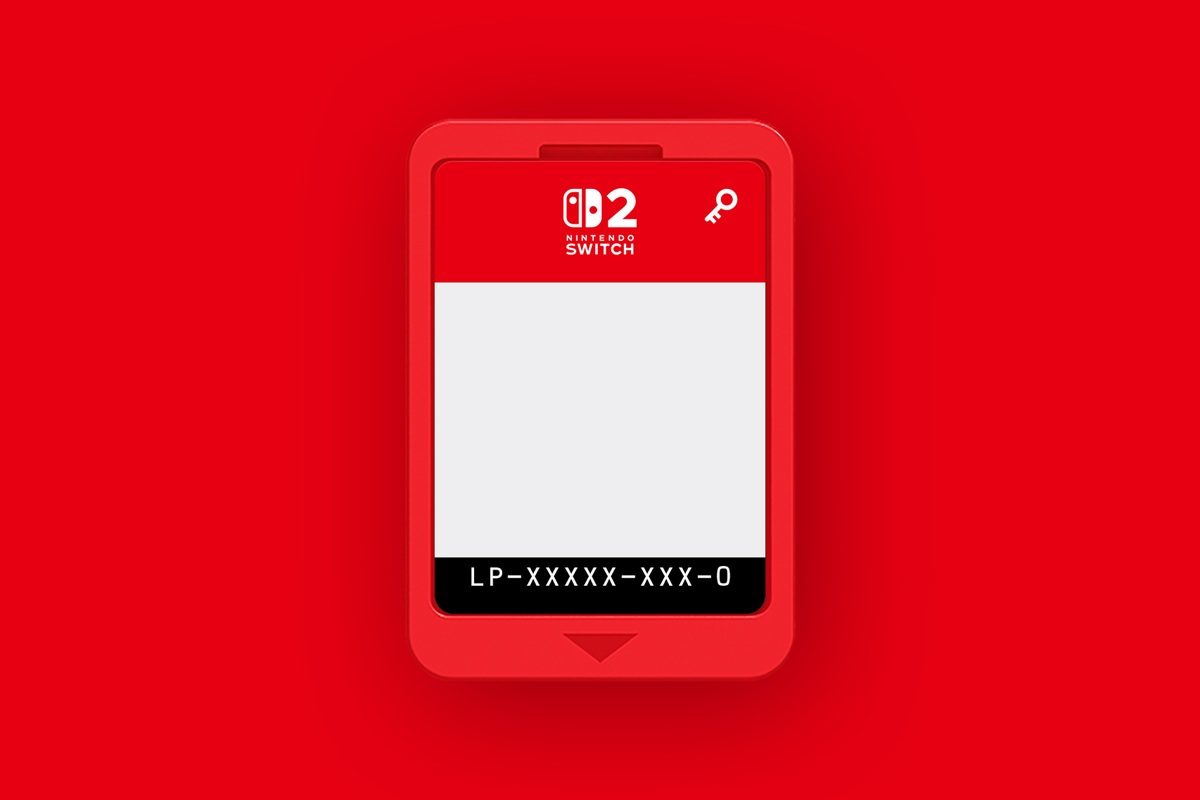
Nintendo’s own explanation identifies two types of Switch 2 physical game card: standard game cards and game-key cards. The latter carry the key needed to access a game, with its data downloaded to the console rather than stored on the card.
The initial setup requires an internet connection and sufficient free space in the system’s storage or a microSD Express card. After downloading, players must keep the game-key card inserted when launching the game. Nintendo says the card itself does not require an internet connection for subsequent launches, although a game’s online features can have their own requirements.
Its FAQ also confirms that a Nintendo Account is not required to download a game-key card’s data. The card can be used in another Switch 2, provided the necessary download is completed there too. It therefore behaves differently from a single-use download code redeemed to an account.
For buyers, checking the box remains important. Game-key releases carry specific packaging information and a key symbol on the card. That distinction matters when buying a gift for someone with limited internet access, planning storage space or choosing a copy for long-term preservation.
Digital Growth Does Not Mean Physical Has Disappeared
Nintendo’s latest financial report puts the business context on a clearer footing. In April–June 2026, digital sales reached 132.7 billion yen, up 90% year over year, and represented 61.5% of dedicated video game platform software revenue. The remaining 38.5% was outside that digital-sales category.
Those figures measure revenue, rather than the percentage of game copies sold physically. Nintendo’s digital definition includes downloadable versions of packaged games, download-only titles, additional content and Nintendo Switch Online. It should not be treated as a simple count of cartridges versus downloads, or directly compared with another publisher’s unit-sales split.
The report also notes that revenue from software bundled with hardware is classified entirely as hardware sales. Bundled copies can therefore appear in software unit totals without contributing to software revenue. This is another reason to keep revenue percentages separate from the number of games bought.
Nintendo can expand its download business while continuing to serve customers who want a box and a card. Van Zyll’s comments support that mixed approach. The practical question for a Switch 2 purchase remains which physical format a particular game uses, and how much downloading is required before it can be played.