Key Notes
- Rockstar plans to weave political messaging into Leonida’s signs, calls and broadcasts while avoiding close imitations of specific real-world figures.
- Rupert Humphries links the approach to GTA’s long development cycle, with broader social behavior offering material that can remain relevant at release.
- The comments describe Rockstar’s writing priorities rather than a new feature announcement, ahead of GTA VI’s November launch on PS5 and Xbox Series X/S.
Grand Theft Auto VI will keep political satire woven into Leonida while avoiding close imitations of specific real-world figures and events, according to Rockstar’s senior vice president of narrative, Rupert Humphries. The approach aims to make its fictional Florida feel contemporary without tying the writing to a short-lived news cycle.
Humphries discussed the creative choices in LOVE magazine, with excerpts reported by VGC on October 5. His comments concern the tone and construction of the world, rather than a newly announced gameplay feature.
Politics Across Leonida’s Everyday Life
Election signs, campaign robocalls, radio advertisements and political talk shows are among the ways Rockstar intends to place political messaging around players. Humphries described a setting full of cultural tensions, with satire carried through the environment as well as encounters with characters.
For an open-world game, that distinction affects where players find the writing. A radio broadcast heard during a drive or an advertisement encountered between missions can establish a local attitude without becoming the central plot. These small pieces can also let different parts of Leonida present conflicting accounts of the same society.
The important boundary is between recognizable behavior and a direct imitation of today’s headlines. A fictional campaign can explore vanity, manipulation or public resentment through its own characters. Players may recognize the behavior even when the story does not depend on remembering a particular politician.
A Fictional Florida With Its Own Characters
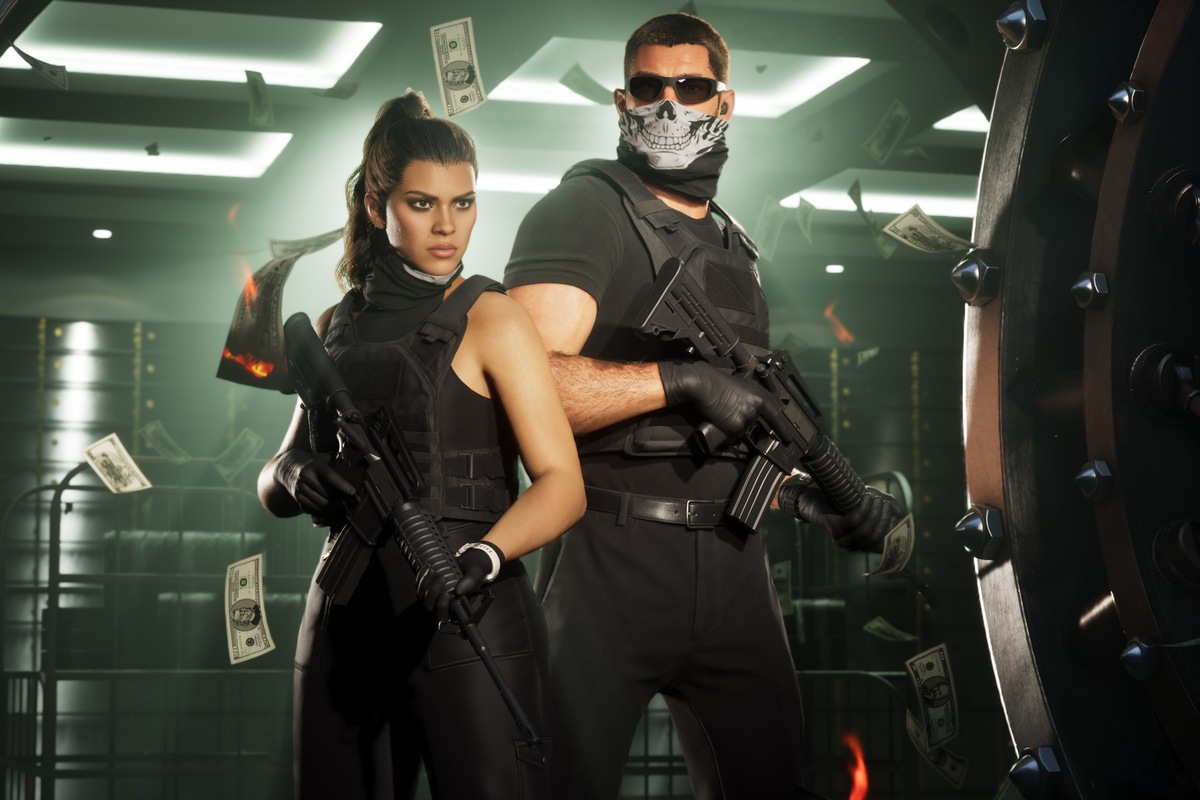
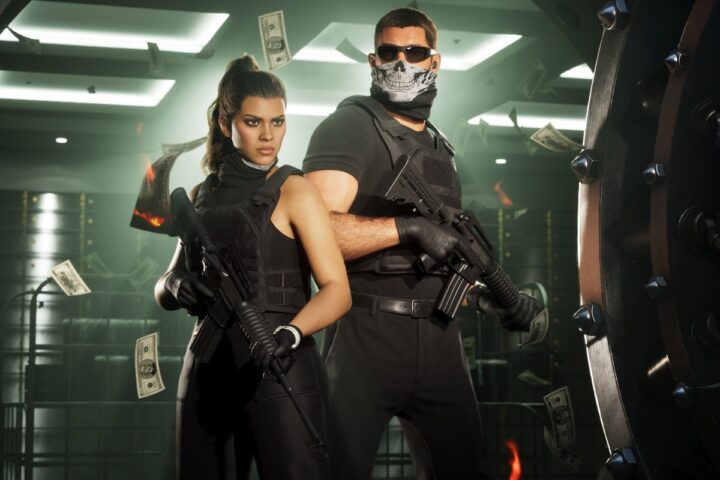
Rockstar’s character profiles already offer examples of the social world surrounding Jason Duval and Lucia Caminos. Jason’s friend Cal Hampton spends time monitoring Coast Guard communications and browsing the internet, with the publisher presenting him as someone drawn to paranoia. That gives the setting a specific character through whom suspicion and conspiracy thinking can be explored.
Vice City businessman Boobie Ike represents another part of that world. His interests span property, a strip club and a recording studio, with his ambitions tied to aspiring music figure Dre’Quan Priest. These connections place money, status and entertainment inside relationships between fictional people, giving Rockstar material beyond topical references.
The central story remains a criminal adventure. Rockstar describes Jason and Lucia becoming entangled in a conspiracy across Leonida after a seemingly straightforward score goes wrong. Its published background gives Jason experience working for drug runners, while Lucia is rebuilding her life after prison.
Those character details suggest that political commentary will share space with personal ambitions and local power structures. That is our reading of the material Rockstar has released, rather than confirmation of how any specific mission will handle those subjects.
We previously covered the studio’s Florida research, including its exploration of nightlife and different neighborhoods. That work helps explain the attention to place; the satire comes from how Rockstar reshapes those observations into Leonida’s own people and institutions.
Writing That Can Survive a Long Development Cycle
Humphries also connected the approach to the years required to develop a GTA game. He said the writers seek subjects that will remain relevant at release, selecting broader patterns such as conspiracy thinking rather than automatically following temporary trends.
That is a practical challenge for a setting meant to feel current. A joke that needs an explanation of an old online controversy can lose its effect, while a character’s pursuit of influence or belief in a conspiracy can still make sense within the game’s own world. Building those motives into fictional relationships gives the writing context that players can encounter directly.
The comments explain Rockstar’s intentions, but they do not establish how well the finished jokes will land or how every character will be portrayed. Those questions require the completed game, particularly when the humor depends on delivery, timing and the surrounding scene.
Rockstar’s official page lists GTA VI for November 19, 2026, on PlayStation 5 and Xbox Series X/S. The studio has not announced a PC release date. Until launch, the interview offers a clearer account of its writing priorities alongside the setting and characters already revealed.