Key Notes
- Dave Oshry says familiar descriptions such as stealth and RPG can explain New Blood’s games more clearly to people outside the immersive sim audience.
- Gloomwood and Fallen Aces emphasize recognizable settings and activities while offering multiple ways to approach their levels.
- Both games remain in Early Access, so buyers should consider their current content alongside their genre labels.
New Blood Interactive CEO Dave Oshry says “immersive sim” is a poor way to market the kinds of games his company publishes. Speaking to PC Gamer in an interview, he argued that familiar categories such as stealth and RPG communicate more clearly with people outside the genre’s existing audience.
The distinction matters for Gloomwood and Fallen Aces, two New Blood games built around giving players several ways to approach a situation. Their official store descriptions offer a useful example of how a publisher can explain those choices before asking a newcomer to learn a genre’s vocabulary.
A Familiar Genre Can Make a Clearer Pitch
Oshry recalled understanding Thief as a stealth game and Deus Ex as an FPS-RPG long before encountering the immersive sim label. His criticism concerns the pitch: an enthusiast already knows what the term promises, while someone unfamiliar with it may hear “sim” and expect a different kind of game.
“It’s not a good marketing term. And I don’t think it helps,” he told PC Gamer. He also acknowledged a drawback to shorthand: describing Gloomwood through its resemblance to Thief brought expectations that did not fully account for its other influences.
A useful description therefore needs to do two jobs. It should tell a prospective player what they will actually spend time doing, then explain the freedom that makes the experience distinctive. A broad label can start that conversation, but the mechanics still have to carry it.
Gloomwood Leads With Stealth and Horror
Gloomwood’s Steam page describes it as a stealth horror FPS set in a cursed Victorian city. Its setting and activities are immediately recognizable: survive, explore and find a route through hostile streets, tunnels and buildings.
The systems give that premise its flexibility. Visibility and noise affect stealth, while routes across rooftops and through hidden passages let players choose how to travel. Objects can be picked up, thrown, broken or used to gain an advantage. A canesword, firearms and traps offer different responses when an encounter turns dangerous.
Importantly, the page also explicitly references immersive sims among its inspirations. The familiar description and the specialist label coexist. That makes it a more useful example than a simple claim that New Blood has abandoned the terminology altogether.
Gloomwood remains in Early Access, having entered it in September 2022. Its developers say the finished version will include the remaining districts and other content. For a buyer, that development status is a separate consideration from whichever genre name appears in the pitch.
Fallen Aces Sells Its Comic-Book Crime World
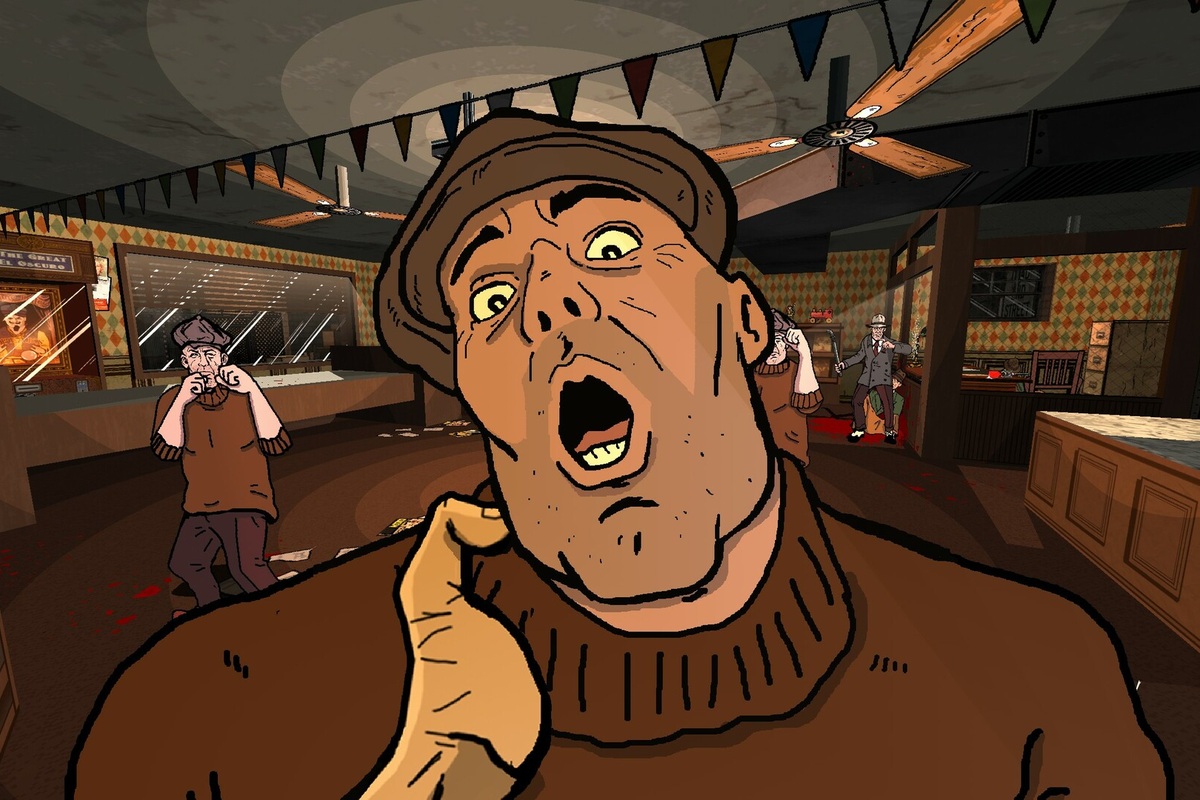
Fallen Aces takes another route. Its store description foregrounds a crime noir FPS with hand-drawn comic-book presentation. Developers Trey Powell and Jason Bond put players in Switchblade City, where its former guardians are being picked off.
Nonlinear levels support sneaking, fighting or combining the two. The available tools extend beyond conventional guns to fists, pipes, frying pans and other objects. Those concrete examples explain player freedom without requiring someone to recognize a design tradition first.
The game also remains in Early Access, which began in June 2024. Its page lists the first two episodes as available and describes three episodes as the plan for the completed release. New Blood additionally groups it with Gloomwood and Blood West in a bundle named the New Blood Stealth Trilogy.
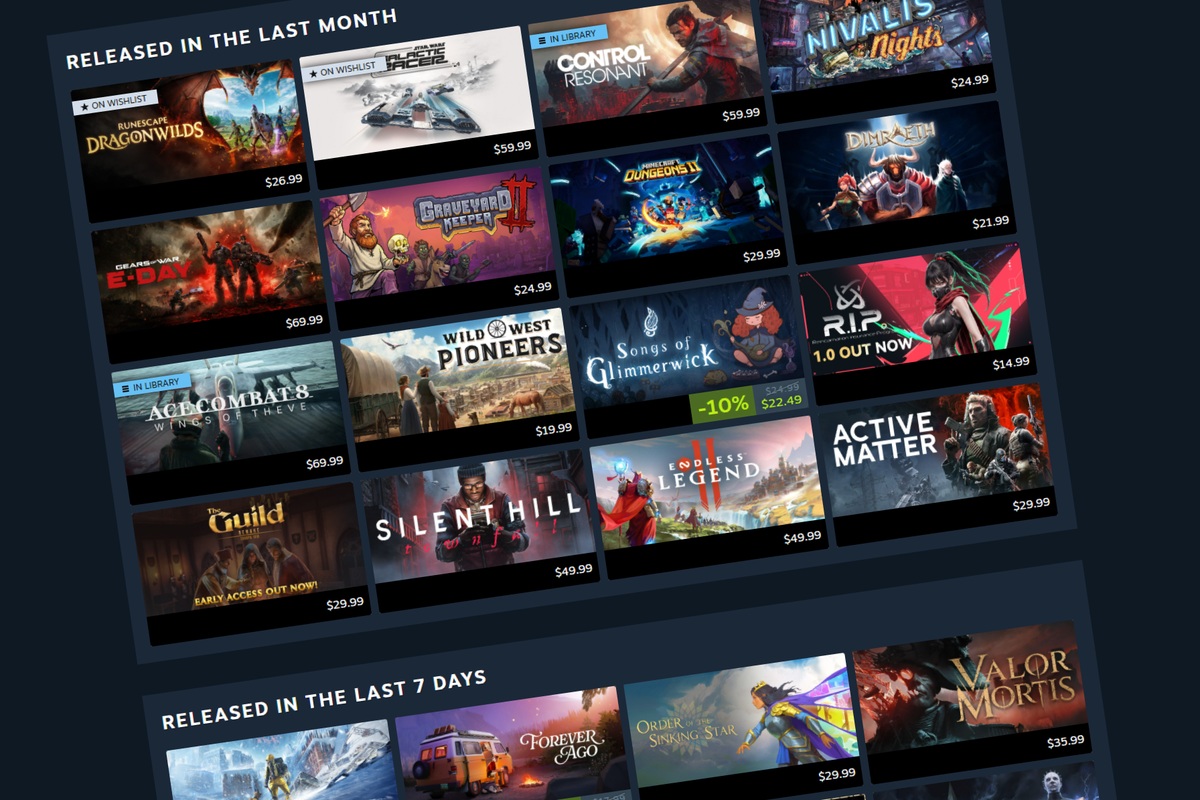
Clear presentation sits alongside storefront discovery. As we covered, Steam’s Personal Calendar now offers tailored release recommendations. Getting a game in front of a potential buyer and explaining why they might enjoy it are related, but different, tasks.
For these two games, the most useful starting point is their actual play: navigating dangerous spaces, choosing an approach and improvising when a plan fails. The store pages give readers enough specifics to decide whether that sounds appealing.