Key Notes
- Valve has moved the Personal Calendar out of Steam Labs, making tailored recommendations for recent and upcoming releases a permanent store feature.
- Recommendations draw on substantial playtime and similar players’ activity, while Valve says developers cannot buy calendar placement.
- The dedicated calendar spans eight weeks and can include Early Access launches, full releases and DLC, helping smaller games reach relevant players.
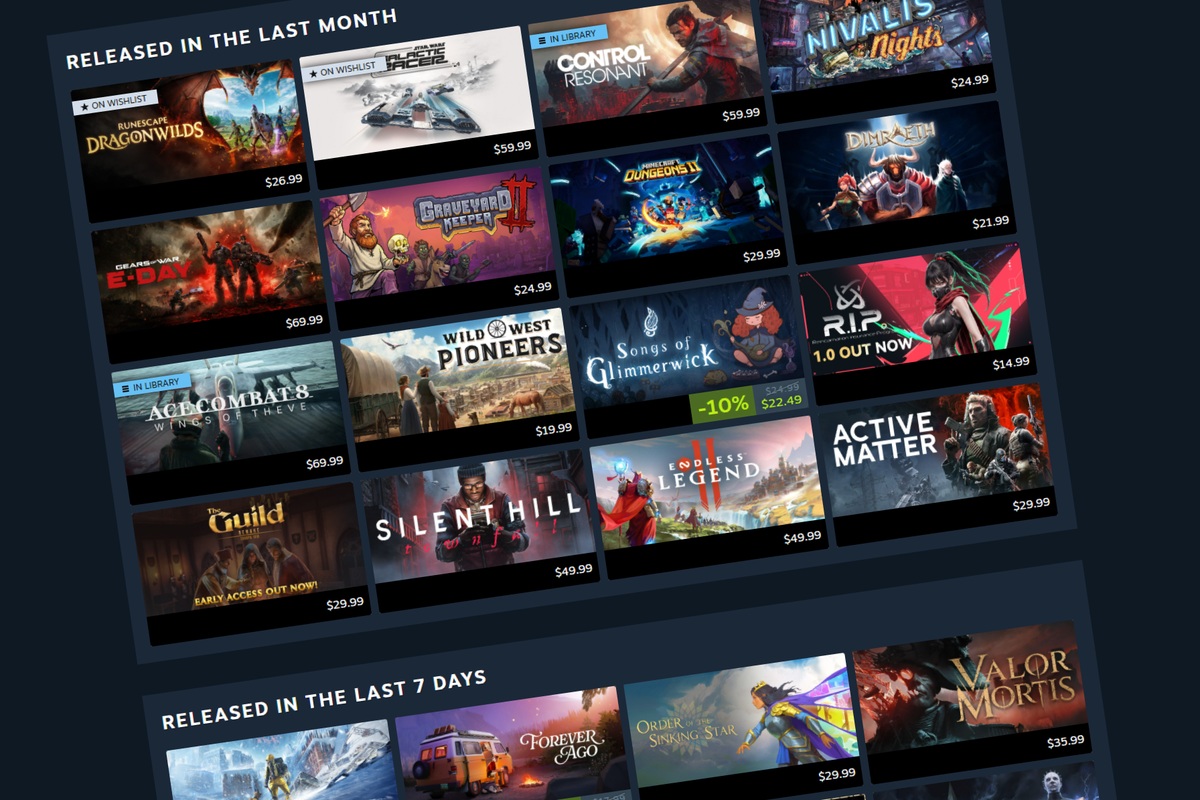
Valve has made Steam’s Personal Calendar a permanent part of the store, giving PC players a release schedule shaped around the games they actually spend time playing. The October 23 rollout moves the feature out of Steam Labs after an experimental launch in 2025.
The calendar brings recent releases and upcoming games into one view. It is intended to make a crowded launch schedule easier to navigate, particularly when an interesting smaller release might otherwise disappear behind a major new game.
A Release Calendar Built Around Playtime
Valve explained that the system starts with recently played games, finds people with comparable playtime patterns, and considers what those players are playing or wishlisting. Spending a few minutes trying something has little influence; sustained interest in a game carries more weight.
The recommendation model refreshes daily, although that does not mean an entirely different selection appears every morning. The calendar changes as its eight-week horizon advances, developers confirm dates and a player’s habits evolve.
That makes it useful for a different question from a bestseller chart. Rather than asking what the largest audience is buying right now, it attempts to identify which new releases are likely to suit a particular player. A high position should therefore be read as a recommendation, rather than a market-wide popularity ranking.
Early Access and Smaller Releases Get More Context
The finished feature includes filtering for wishlisted games, Early Access releases and DLC. Valve also added support for the dates when Early Access games move into their full versions, alongside work on desktop, mobile and SteamOS presentation.
For developers, the visibility documentation describes a practical requirement: a game needs a public Coming Soon page and a specific release date to appear as an upcoming release. Once the relevant conditions are met, eligibility should normally update in about a day.
The documentation distinguishes the dedicated eight-week calendar from the shorter selection on the Steam homepage. It advises setting dates early enough to benefit from those windows. Announcing a date at the last minute leaves less time for the calendar to expose a game before launch.
For an independent studio, this creates another route to players already interested in adjacent games. It does not eliminate the need for a clear store page, an appealing trailer or an accurate release date: the calendar helps someone find a listing, while the listing still has to explain the game.
Calendar Slots Are Not Advertising
Valve says calendar placement is algorithmic and cannot be purchased. It also reports that players click through to more than 2,000 different games during an average day. That figure counts distinct games attracting clicks, rather than buyers, sales or the total number of visitors.
We recently covered Steam’s achievement-set beta, another change that gives developers more ways to present their games. The calendar addresses an earlier step in the same journey: helping someone decide what to investigate before a purchase.
Players can use it as a starting point and then check a game’s own page for release timing, supported devices and Early Access status. A personalized recommendation is useful discovery assistance; it is not a review or a guarantee that a game will match every preference.