
Sensor Tower says mobile game advertising revenue exceeded $12 billion in 2025 across 19 tracked markets, underscoring how important ads have become to the economics of mobile gaming. The analytics company’s latest Gaming Deep Dive: Ad Monetization Report examines ad revenue, impressions, downloads, genres, networks and top-performing titles across major global markets.
The report does not cover the entire world. Sensor Tower’s dataset focuses on 19 countries: the United States, Canada, France, the United Kingdom, Italy, Germany, Spain, Indonesia, India, Japan, Malaysia, Mexico, Poland, South Korea, Saudi Arabia, Thailand, Turkey, Brazil and Vietnam. Even with that limitation, the scale of the market is significant.
Across those markets, mobile game ads generated 2.4 trillion impressions in 2025. Downloads of mobile games with advertising reached 24.6 billion for the year, with January producing the highest monthly total at 2.33 billion downloads. Those figures show that ad-supported games continue to dominate the download funnel even as revenue patterns vary sharply by region and genre.
The share of mobile games using ad monetization has also increased over time. Sensor Tower says the share rose from 45.1% in July 2021 to 55.6% in May 2026, reflecting how developers have added advertising as in-app purchase growth has slowed. Ads are no longer only a backup monetization layer for mobile games; for many products, they are now part of the core design and revenue model.
Ads Carry More Weight in Emerging Markets
One of the clearest findings in the report is the split between emerging and mature markets. In developing countries, advertising often accounts for the majority of mobile game revenue. In more mature markets, in-app purchases still tend to carry more weight.
Sensor Tower highlighted India and the United States as a sharp contrast. From January to May 2026, advertising accounted for 70.3% of mobile game revenue in India. In the United States, ads represented only 22.1% of revenue over the same period. That gap shows why mobile studios cannot treat ad monetization as a single global strategy.
For developers, the regional split affects everything from game design to user acquisition. A game built for markets where players spend less through IAP may need stronger rewarded video, interstitial and ad progression systems. A game targeting the United States, Japan or other higher-spending regions may still rely more heavily on purchases, subscriptions or hybrid monetization.
This is also why ad monetization has become more closely tied to product strategy. Publishers are not simply choosing which ad network to use. They are deciding how ads fit into progression, retention, session length, reward pacing and market selection.
Puzzle Games and Major Networks Lead the Market
Sensor Tower’s genre breakdown shows how concentrated mobile game ad revenue has become. Between February and April 2026, casual and hypercasual games each accounted for 40% of ad revenue. Hybrid games generated another 16%, while midcore games represented 4%.
Puzzle games were the leading genre by ad revenue share, reaching 53% between February and April 2026. Arcade games ranked second with a 13% share. That concentration helps explain why many of the highest-performing ad-monetized titles are simple to understand, easy to replay and built around frequent short sessions.
The ad network market is concentrated as well. In May 2026, AppLovin and AdMob together accounted for 65% of mobile game ad revenue, up from 61% roughly a year and a half earlier. That gives the two networks significant influence over how demand flows through mobile gaming.
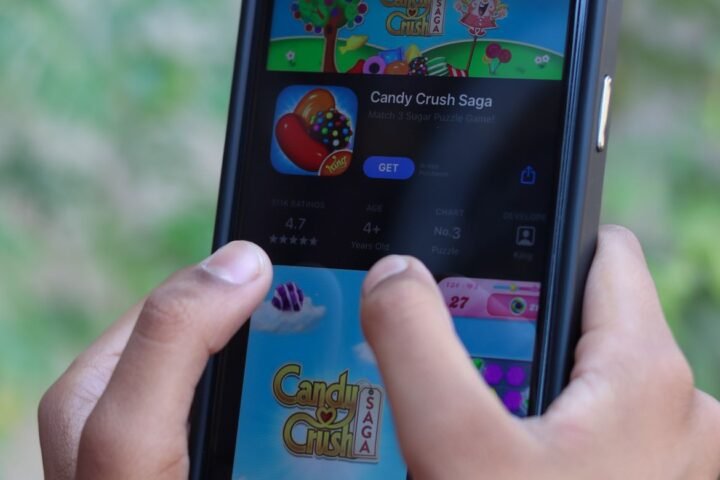
At the title level, Block Blast! generated the highest ad revenue from January to May 2026, with $127 million. Vita Mahjong followed with $89.8 million, while Candy Crush Saga ranked third with $81.1 million. Among publishers, the top three were Hungry Studio with $131.2 million, Easybrain with $117.3 million and Onesoft with $113.5 million.
The broader message from the report is that mobile game advertising has become a mature, highly structured business. Developers can still use ads to reach large audiences and build scalable revenue, but the strongest results depend on genre fit, regional targeting, network strategy and product design. In 2025, that combination was large enough to push tracked mobile game ad revenue above $12 billion.